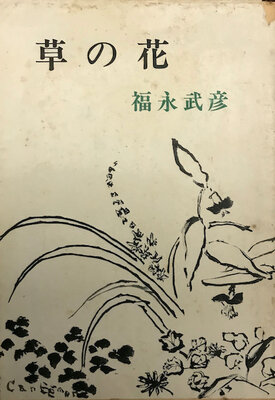
Flowers of Grass is Takehiko Fukunaga’s fully realized portrait of a young man of fastidious intelligence and great sorrow, and shows us how it is possible, seeing reality from the side of death and despair, to still choose life. Outside Tokyo, a tuberculosis sanatorium in the village of K has a six-bed ward that the narrator, an aspiring poet, shares with a student of linguistics and budding writer named Shiomi. After the stubborn Shiomi insists on undergoing a dangerous surgical procedure and dies in the process, two notebooks turn up in his bed-sheets. Flowers of Grass unfolds as the narrator reads them, asking himself if Shiomi’s death was a sort of suicide, and learning the details of his late friend’s two great loves: for a brother and sister, both of whom reject him. Fukunaga himself spent seven years recuperating from tuberculosis following World War II, and drew on his own experiences to create a fully realized portrait of a young man of fastidious intelligence and great sorrow, and how it is possible, seeing reality from the side of death and despair, to still choose life.
Japanese study overview
Kusa no Hana is a Japanese novel of 131,920 characters, with 7,466 unique words and 1,997 different kanji. Its difficulty rating on Jiten is hard, 3.7 out of 5. The full vocabulary list ranks all 7,466 words by how often they appear, and you can study them on Jiten or download them as an Anki deck.
Similar Media
xx% = content similarity






Vocabulary highlights
Here are some of the words that appear most often in this media, as well as a sample of its rarer vocabulary.
- 僕I×1,454
- 言うto say×341
- 藤木Fujiki×311
- 汐見Shiomi×283
- 千枝子Chiiko×223
- 中inside×191
- 私I×180
- 思うto think×173
- 自分myself×156
- 上above×146
- 顔face×146
- 方direction×139
- 僕等we×110
- 矢代Yashiro×80
- 千枝Chie×67
- 柳井Yagii×45
- 此所here×41
- 石井Ishii×39
- 基督教Christianity×32
- 見詰めるto stare (at)×31