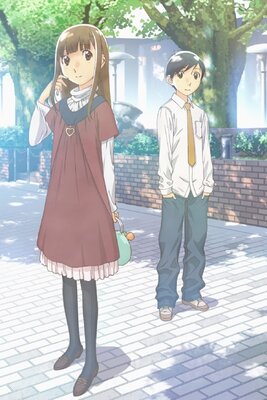
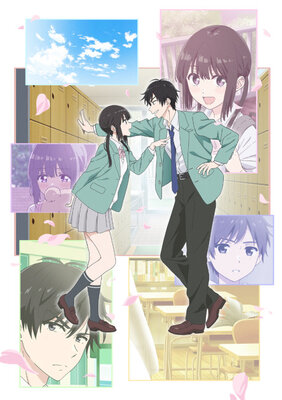
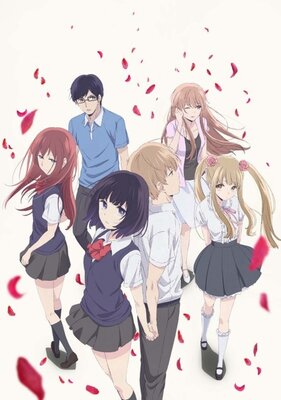
Fifth grader Shuuichi Nitori is considered by most to be one of the prettiest girls in school, but much to her dismay, she is actually biologically male. Fortunately, Shuuichi has a childhood friend who shares similar feelings of gender dysphoria: the lanky tomboy Yoshino Takatsuki, who, though biologically female, does not identify as a girl. These two friends share a similar secret and find solace in one another; however, their lives become even more complicated when they must tread the unfamiliar waters of a new school, attempt to make new friends, and struggle to maintain old ones. Faced with nearly insurmountable odds, they must learn to deal with the harsh realities of growing up, gender identity, relationships, and acceptance. Lauded as a decidedly serious take on gender identity and LGBT struggles, Takako Shimura's Hourou Musuko is about Shuuichi and Yoshino's journey to discover their true selves as they enter puberty, make friends, fall in love, and face real and difficult choices. Note: The full version of Hourou Musuko was originally intended to be 12 episodes, but the programming block it aired on only had space for 11 episodes. Therefore, episodes 10 and 11 were edited together and aired on TV as episode 10. Episode 12 was aired on TV as episode 11. The full versions of episodes 10 and 11 were included on the BD & DVD releases and are included in the Hourou Musuko Specials entry.
Japanese study overview
Hourou Musuko is a Japanese anime of 40,111 characters, with 2,325 unique words and 796 different kanji. Its difficulty rating on Jiten is easy, 1.3 out of 5. The full vocabulary list ranks all 2,325 words by how often they appear, and you can study them on Jiten or download them as an Anki deck.
Similar Media
xx% = content similarity








Vocabulary highlights
Here are some of the words that appear most often in this media, as well as a sample of its rarer vocabulary.
- 君Mr×121
- 僕I×117
- 二鳥Nichō×111
- 高槻Takaki×101
- 言うto say×96
- 思うto think×83
- 千葉Oba×74
- 君you×73
- 自分myself×56
- 安那Anna×54
- お前you×49
- 人person×46
- 佐々Sasa×23
- 真穂Makiho×21
- 更科Kōka×18
- 土居Takadoi×15
- 倒錯perversion×14
- 詰め襟stand-up collar×9
- 声変わりchange of voice (during puberty)×4
- 修道士monk×4